The late-night ride, planned safer.
At midnight in Hyderabad, a woman booking a cab runs her own safety check by hand. SafeRide Priority is one toggle inside the Uber app that does it for her before the door closes: a plain brief, a safer drop point, a driver who has already committed, and a circle that knows without asking.
- 8 PM to 5 AM, any hour for emergencies
- Every ride type except Parcel
- Immediate priority for female riders
Independent portfolio concept. Not affiliated with, endorsed by, or sponsored by Uber. All data and interactions are simulated.
Eight chapters, five minutes.
Tap a stop to jump in. Every chapter ends with its takeaway.
At midnight, she runs her own safety check by hand.
- Women booking cabs after 8 PM in Hyderabad check the driver, share the trip and text a friend by hand. 4 in 10 fear the ride.
- Every safety tool Uber ships starts once the car is moving. The minutes before booking stay empty.
- My thesis: one toggle that does the checking before pickup, and a driver who has already committed to the trip.
The safety plan is manual, and it happens at the worst moment.
Women navigating cities at night often assemble a plan by hand: check driver details, share trip links, call someone, pick a visible gate instead of the exact destination, keep contacts updated.
The platform already ships a strong safety toolkit: SOS, trip sharing, RideCheck, trip PINs, audio recording and a 24x7 safety line. The features exist. The booking flow still leaves riders juggling those tools alone at midnight.
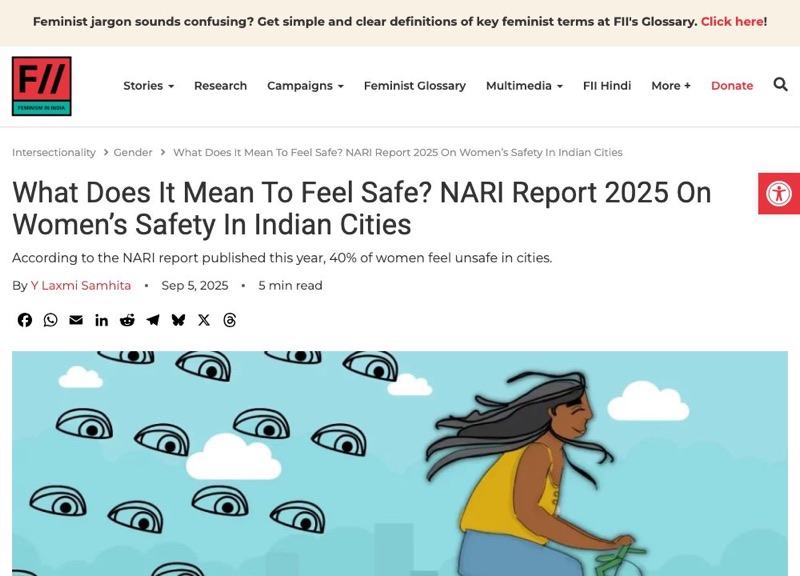 Feminism in India · NARI 2025
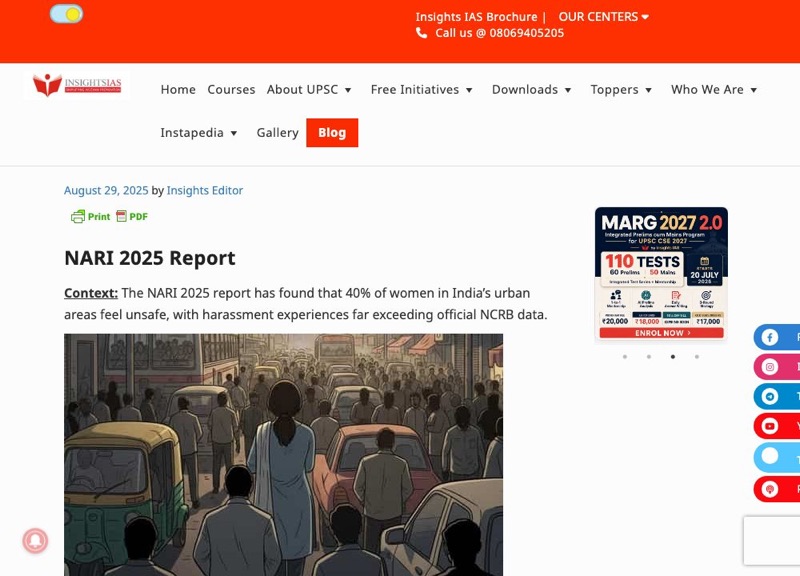 Insights on India · NARI 2025 method
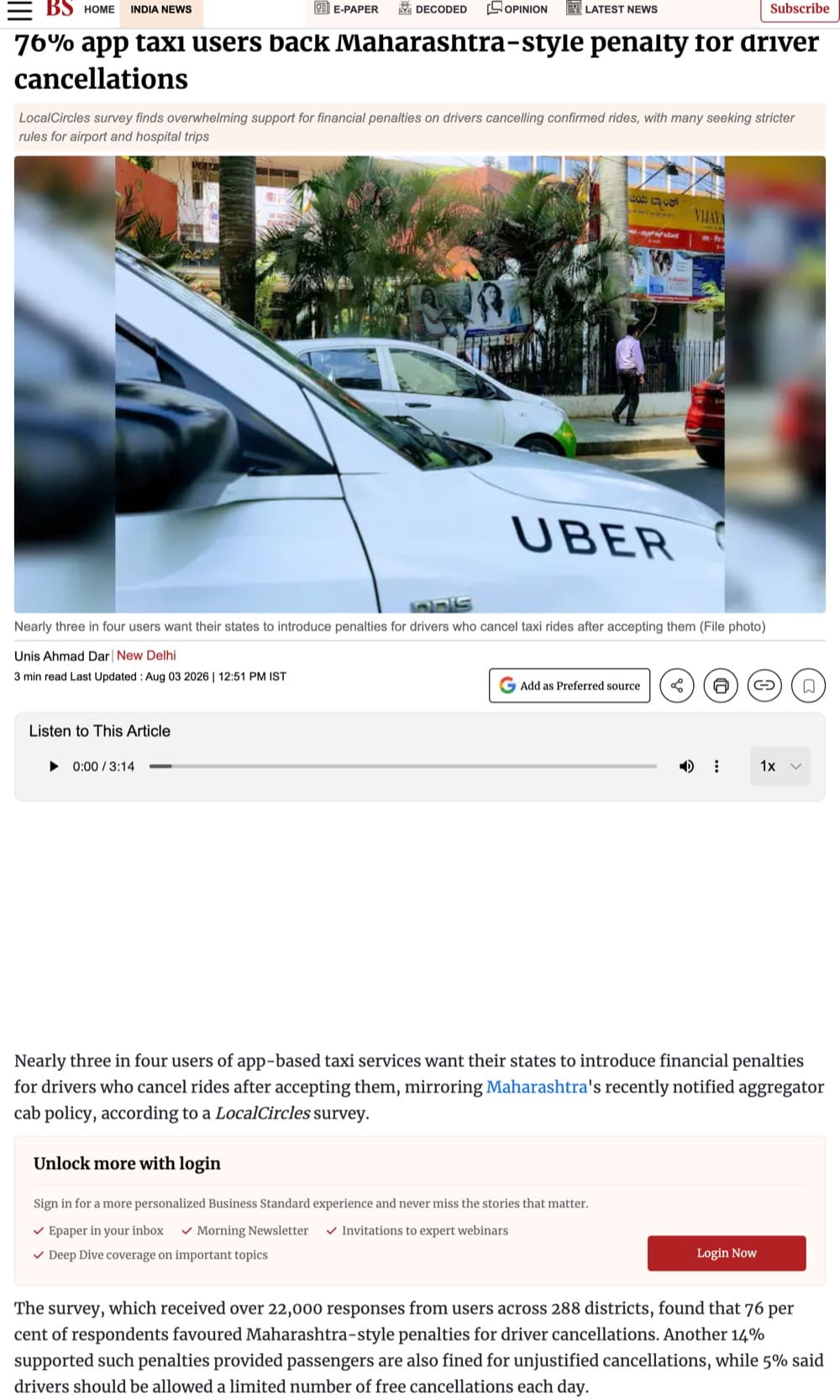
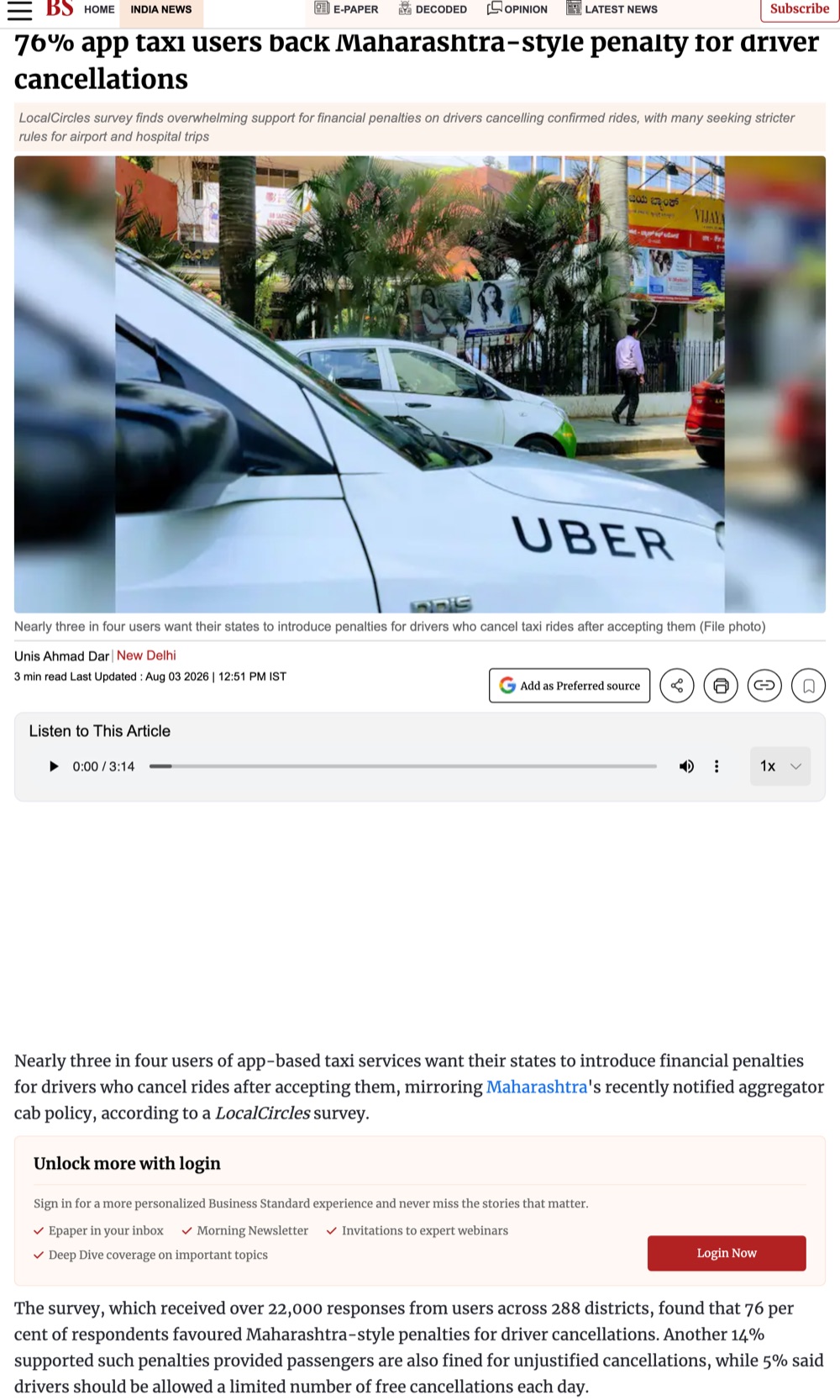 Business Standard · Aug 2026
A decision layer that runs
before the booking.
The SOS button and every tool Uber ships today stay exactly where they are. SafeRide Priority Priority sits in front of them: one toggle at booking that plans the trip, commits the driver, tells the right people, and closes the loop when you arrive.
The fear is measurable and the headlines have not stopped in twelve years. On top of it, 82% of app taxi users say drivers cancel on them, and nights make it worse. When riders cannot trust the ride to come, they stop riding, and the night market shrinks with them.
A planning layer inside the booking flow. Before pickup it reviews the ride plan, suggests safer drop points, matches an audited driver who has already committed to your trip, alerts a trusted circle and checks that you reached. One toggle covers the fear and the no-show.
Deterministic rules on audited signals, and clear consent before anything is shared. One tap says why you ride, and the reason sets the queue: hospital runs and emergencies go first, at any hour of the day. Seven steps, under two minutes, piloted in Hyderabad.
The safety work moves to before the pickup.
- Nothing replaced1 OF 4
Every safety tool the app ships today stays exactly where it is. SafeRide Priority arms them before pickup, so the rider never has to remember them mid ride.
- Earlier by design2 OF 4
Today's tools respond once something already feels wrong. SafeRide Priority works earlier and lowers the chance that moment arrives at all.
- A committed pickup3 OF 4
The driver accepts your trip before you see the match, cannot drop it for a ride on another app, and if anything changes you are rematched first in line.
- Her call, always4 OF 4
One tap says why you ride: a late shift, a hospital run, a night the ride simply has to come. Emergency, medical and urgent trips switch it on at any hour, and every share, match and anchor is her explicit choice.
Written backwards from the room that decides.
Before any research, I named the reader, the decision and what done looks like.
One city, one corridor, riders who choose it. The pilot pulls the baselines and tests the four assumptions the case rests on.
Rider product, Trust & Safety and Marketplace leads decide. Privacy Counsel and city Ops review first.
Trips completed instead of cancelled. Support cost saved. Rider trust gained. All measured against today's Uber.
One person, one city, one gap nobody is filling.
- I am Deekshitha Sreerala. Every part of this case, from the research to the pilot app you can open, is my own work.
- Four people share one night ride: the rider, the contact who waits, the driver, and the platform that decides.
- India's ride-hailing market is heading for $3.8 billion by FY2032, near 19% growth a year. Uber, Ola, Rapido, inDrive and Mana Yatri all start their safety work after pickup.
One person. Every seat.
No company, no team, no budget. This is what one person can take from a noticed habit to a working prototype, and where that stops.
An AI product management generalist. I take a fuzzy problem from research to working software, and this page shows how I work.
- There is no company behind this page and no team beside me. The research, the rules, the guided prototype, the pilot app and this case are one person's work.
- I built it the way I would run a product: problem first, rules before screens, every number tagged, nothing claimed that a pilot has not shown.
- If you see a hole in the argument, a number that looks wrong, or a better way to do any of this, I want to hear it.
Criticism, inputs and advice are all welcome.
- 1Noticed the ritual
Women I know book a cab after dark and run the same five checks by hand. Then I found that 4 in 10 say they fear the ride.
- 2Read what riders wrote
29 public reviews across five apps and six news reports, 2014 to 2026. The same headline, twelve years apart.
- 3Wrote the rules first
84 plain rules for what the product does and never does, before a single screen. They still decide every value on every screen.
- 4Built it, twice over
A guided prototype that explains each screen, and a pilot app you can open hands-on. Same rules, same eight screens. Six decisions changed along the way.
- 5Wrote this case
For the room that decides: every number sourced, assumed or a hypothesis, and a verdict at the end of each part.
Four people, one night ride.
The rider is the user. Her contact carries the worry. The driver decides whether the ride comes.
Works in HITEC City, lives in Gachibowli. Rides home after 10 PM two to four nights a week.
- TONIGHT
- 12:15 AM after a release night. Tired, alone, phone at 20%.
- THE WORKAROUND TODAY
- Checks the rating. Calls a friend. Shares the trip by hand. Asks for a visible gate.
- THE JOB TO BE DONE
- When I book late at night, help me choose safely without vetting every driver, route and drop point myself.
Student. Late rides home after classes and events, on a student budget.
- TONIGHT
- 10:45 PM from a friend's place. Parents waiting up.
- THE WORKAROUND TODAY
- Sends a screenshot of the cab to the family group. Stays on a call until she is home.
- THE JOB TO BE DONE
- When I ride home late on a budget, let me switch on real protection without paying for another service.
Priya's sister. The trusted contact who gets the link and holds the worry.
- TONIGHT
- A message at 12:16 AM with a plate, a driver's name and a live map.
- THE WORKAROUND TODAY
- Asks "reached?" every twenty minutes and keeps the chat open.
- THE JOB TO BE DONE
- When someone I love is in a cab at night, tell me who is driving, where it is going and when to worry, without me asking.
Night driver. Verified, safety trained, more than 1,000 trips. A SafeRide Priority Partner.
- TONIGHT
- Three long night requests. One pays a little more if he commits before the rider sees him.
- THE WORKAROUND TODAY
- Runs two apps and drops the weaker request when a better fare lands.
- THE JOB TO BE DONE
- When I drive at night, give me a fair, clear path to priority trips, with no hidden penalties.
The market I am
building into.
Ride-hailing in India is huge, growing fast, and fought over by three big apps. Here is the market in numbers, the slice I am aiming at, and what every player already ships for safety. Every number carries its source on the card.
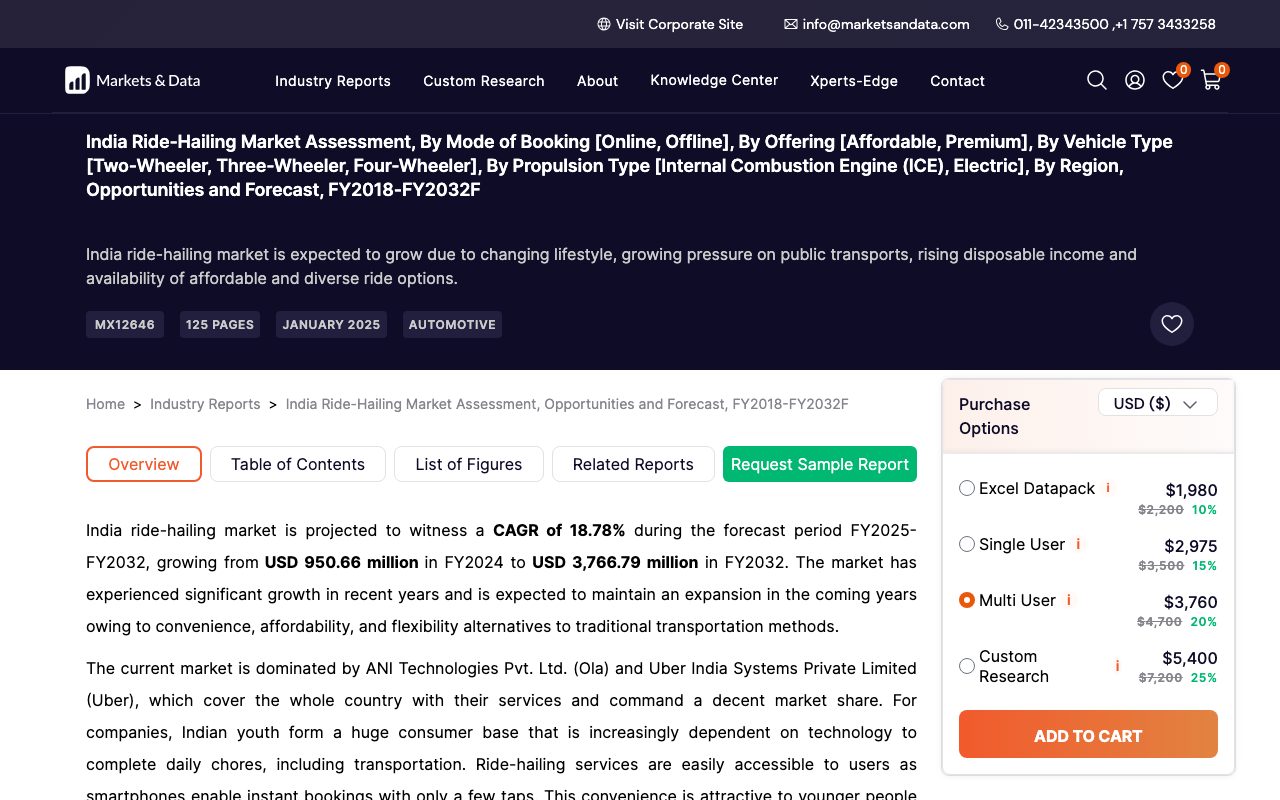 Markets and Data · Jan 2025
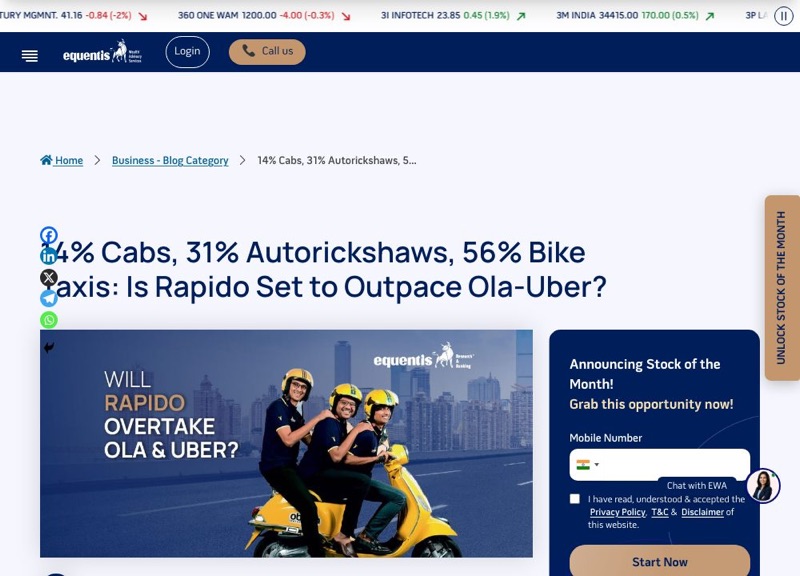 Equentis Research · Aug 2025
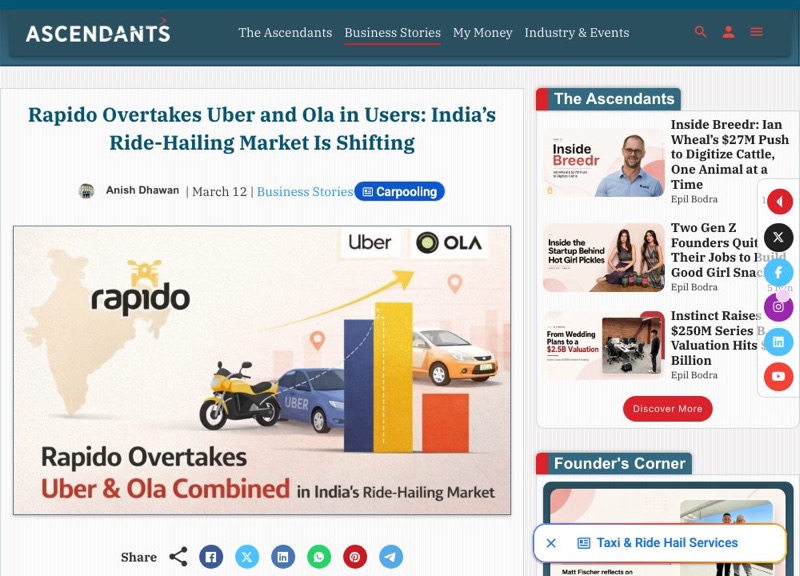 Ascendants
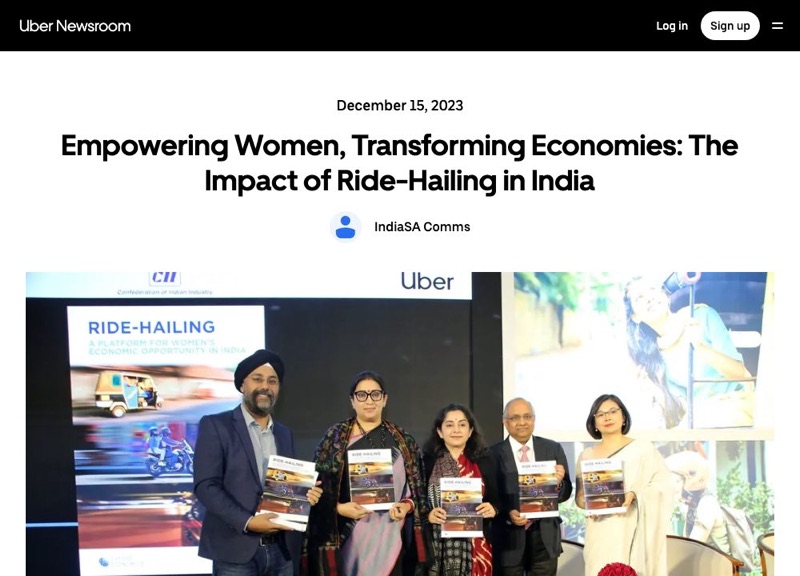 Uber with Oxford Economics · 2023
The slice I am aiming at.
The outer ring is the whole market. The middle is late nights in the big metros, where the fear lives. The centre is the first bite: Hyderabad, 8 PM to 5 AM. Tap a ring or a tab.
The first bite: one city of 11.3 million people, a top 3 Uber city. Demand for watched night travel is already proven here.
What each app ships for safety today.
Read the small tags. Nearly everything switches on during the ride. That is the pattern SafeRide Priority is built to complete.
- Trip PIN before boardingat pickup
- Share My Trip with up to 5 contactsduring the ride
- RideCheck flags odd stops and detoursduring the ride
- In-app audio recordingduring the ride
- SOS and a 24x7 safety lineduring the ride
- Women Rider Preference, for women driversdriver side
- Start Code before the trip beginsat pickup
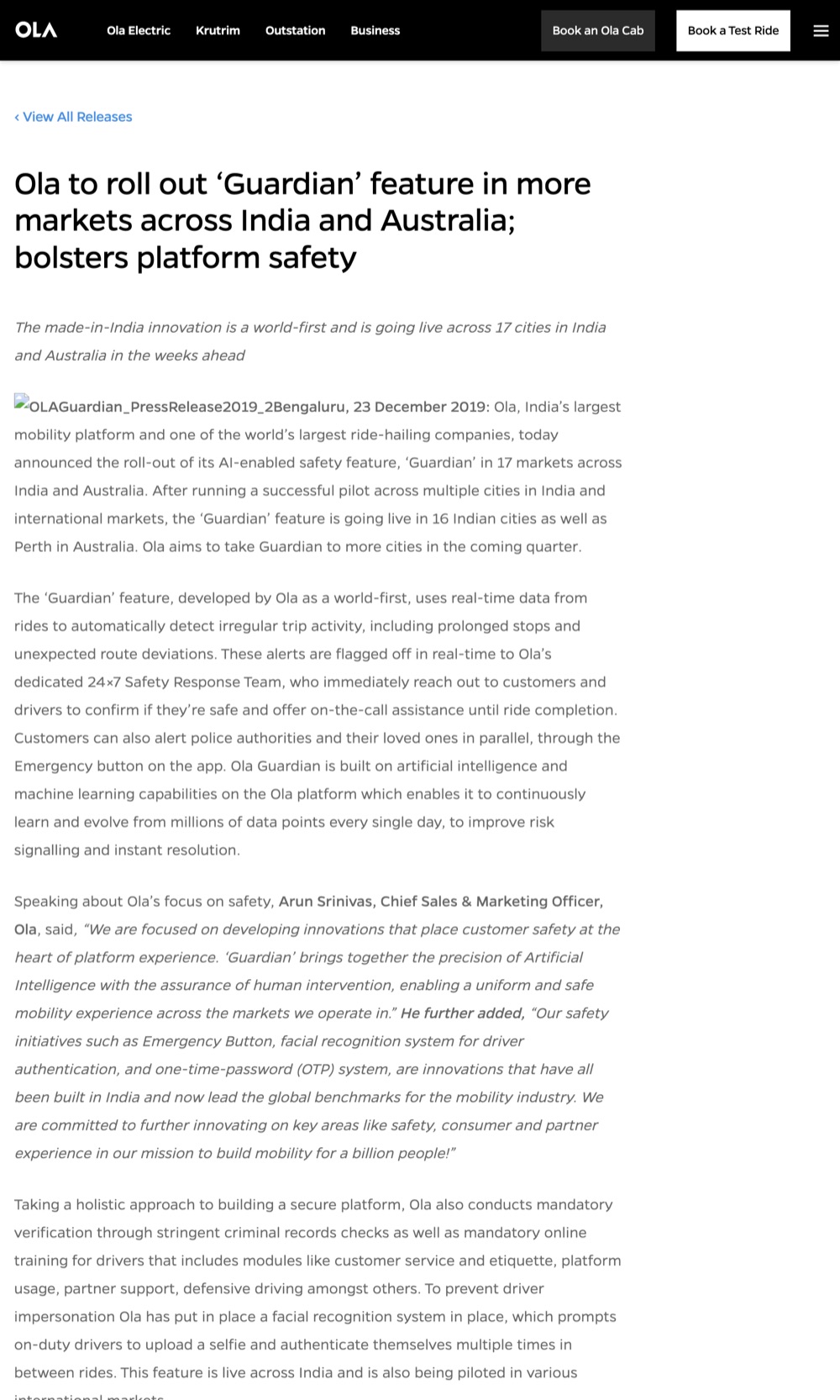
- Guardian AI watches route and stopsduring the ride
- Emergency button wired to policeduring the ride
- Ride pooling switched off 11 PM to 6 AMbooking rule
- SOS and emergency contactsduring the ride
- Live tracking and location shareduring the ride
- Bike Pink, women captains for women ridersChennai and Karnataka
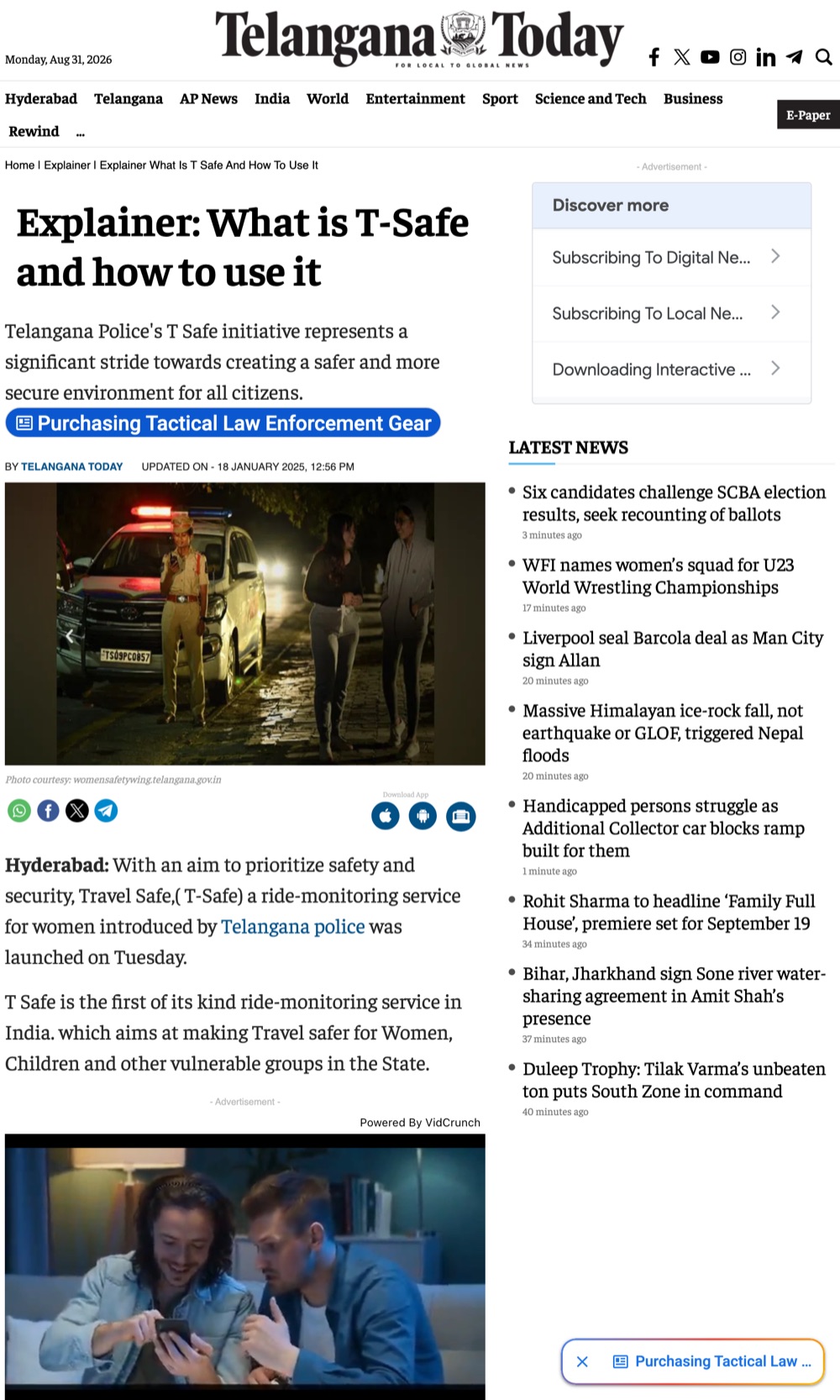
- T-Safe, dial 100 ride monitoring with auto check-insduring the ride
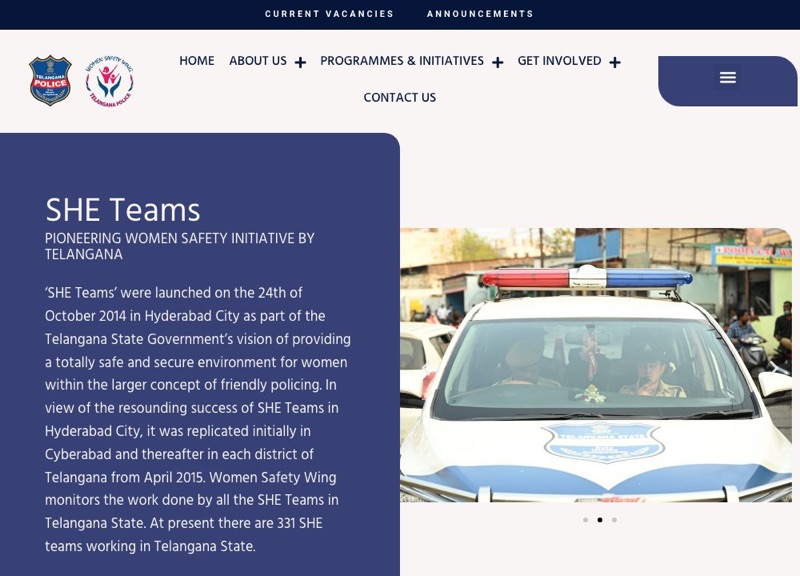
- 331 SHE Teams across Telanganaon the street
- SHE Shuttle in the IT corridorlast mile
Built for Uber first. Made for every riding app. Nothing in SafeRide Priority is Uber-only. The brief, the safer drop, the committed pickup, the circle and the check-in sit on top of any booking flow. Uber goes first because its toolkit is deepest, so the pilot reads out fastest.
- 1
Almost every tool above starts working after the car does. The minutes before booking stay empty, and that is exactly where the SafeRide Priority feature lives.
- 2
The gap is structural: each app added safety tools one switch at a time, and no team owns the moment before the booking. Sequencing those switches into one flow is a product job.
- 3
Hyderabad police built T-Safe and want cab apps to plug into it. The tracking link and circle SMS are shaped to be that bridge.
- 4
Nothing here is Uber-only. The same toggle, brief, committed pickup and circle can sit inside Ola, Rapido, inDrive or Mana Yatri. Uber goes first because its toolkit reads out fastest.
Fixed before the first screen was drawn.
Constraints found late restart a case. These were set on day one.
What the reviews, the reports and the numbers said.
- Desk research on 12 public sources, 29 rider reviews across five apps, six news reports from 2014 to 2026, and a competitor audit.
- Six jobs she does by hand every night, and the number each one suppresses on Uber's dashboards.
- Six insights, each traced to a screen. Nothing here came from a live interview yet; that is the first pilot stage.
Six methods, one flow.
What the research did, in order. The limits sit below it, said plainly.
- 1Desk research12 sources
Public reports and studies, each shown as a screenshot that opens the original.
- 2Review mining29 reviews
Real screenshots across five apps, coded into six jobs.
- 3Competitor audit5 apps · 4 phases
What every app does before, at, during and after the ride.
- 4News timeline6 reports
Safety and reliability stories, 2014 to 2026, captured clean.
- 5Rules as requirements84 rules
Every requirement as a plain sentence, enforced in the prototype.
- 6Live interviews0 so far
Personas come from reviews and posts. Conversations are pilot stage 1.
- 1.Public numbers only. Uber's own baselines are not public.
- 2.Reviews show the pattern, never the rate.
- 3.Reads public feature pages, as of this year.
- 4.Headlines prove persistence, not frequency.
- 5.Written alone. A pilot team would challenge several.
- 6.The biggest gap in this research, said plainly.
These limits set the next step: stage 1 of the pilot goes deeper into the problem with real riders and Uber's own baselines, before the solution hardens.
The same headline,
twelve years apart.
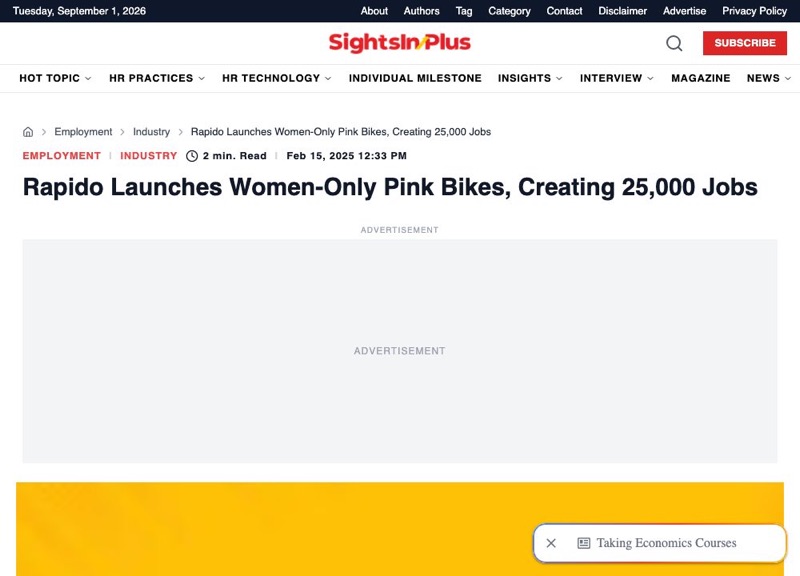
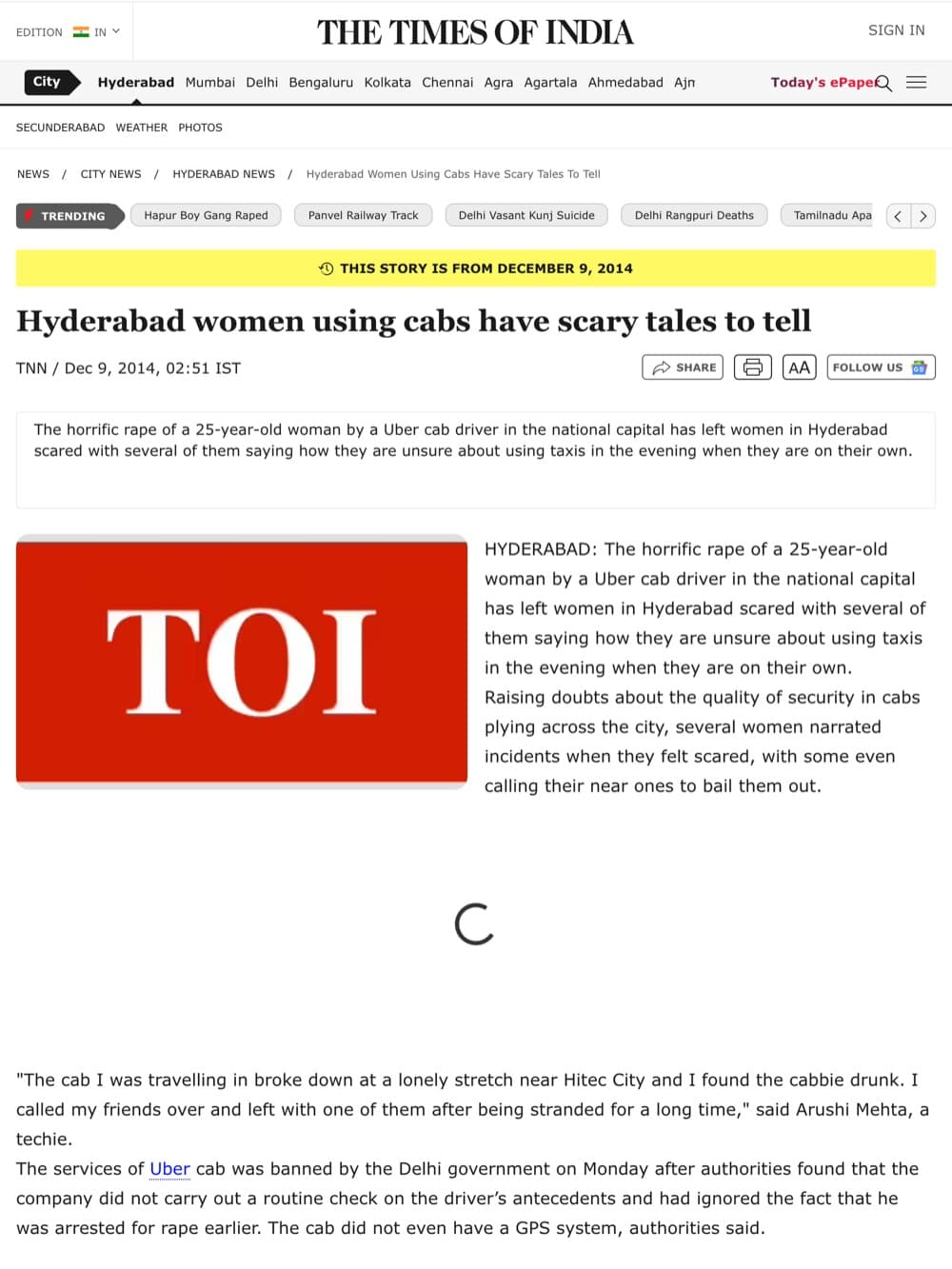
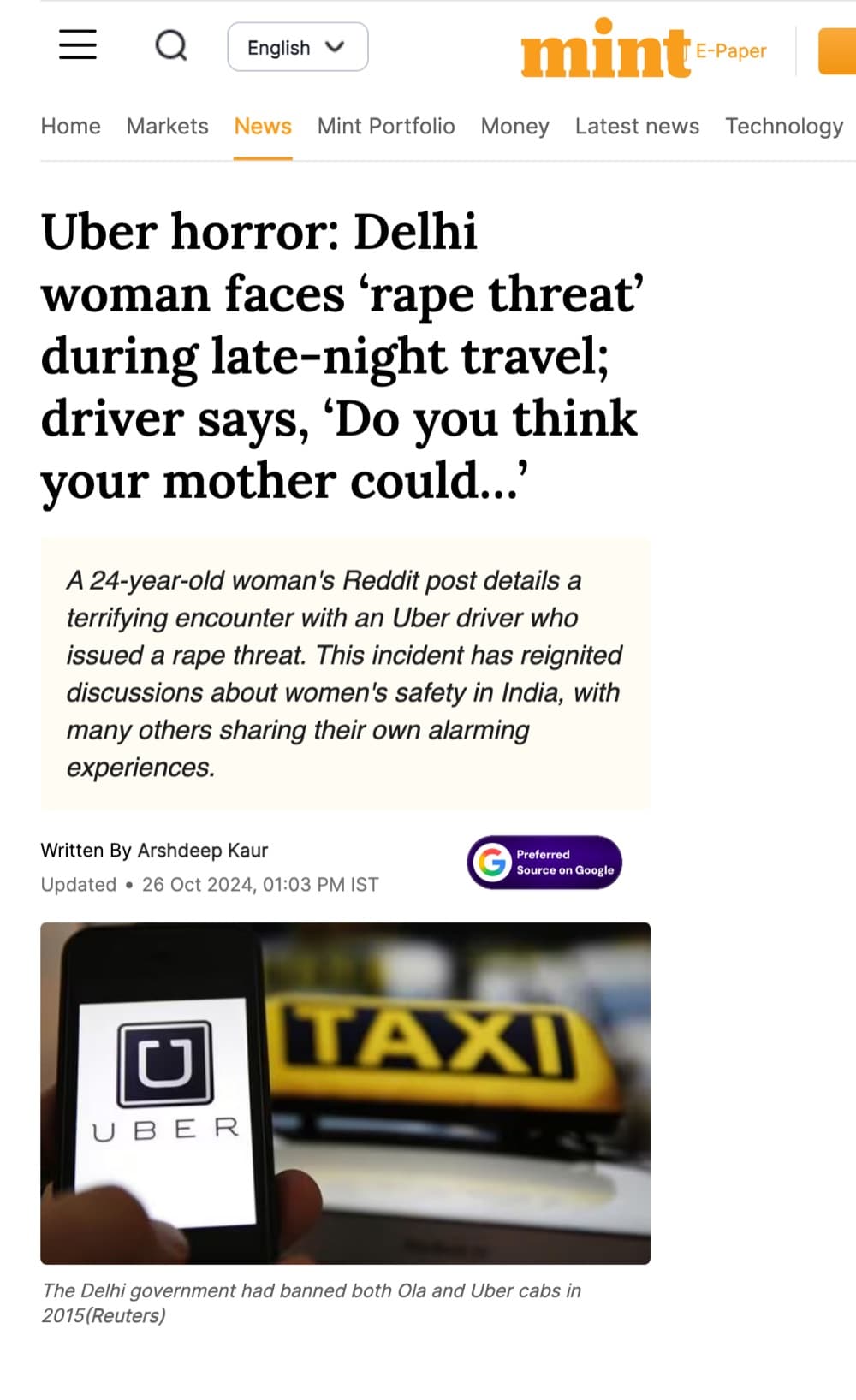
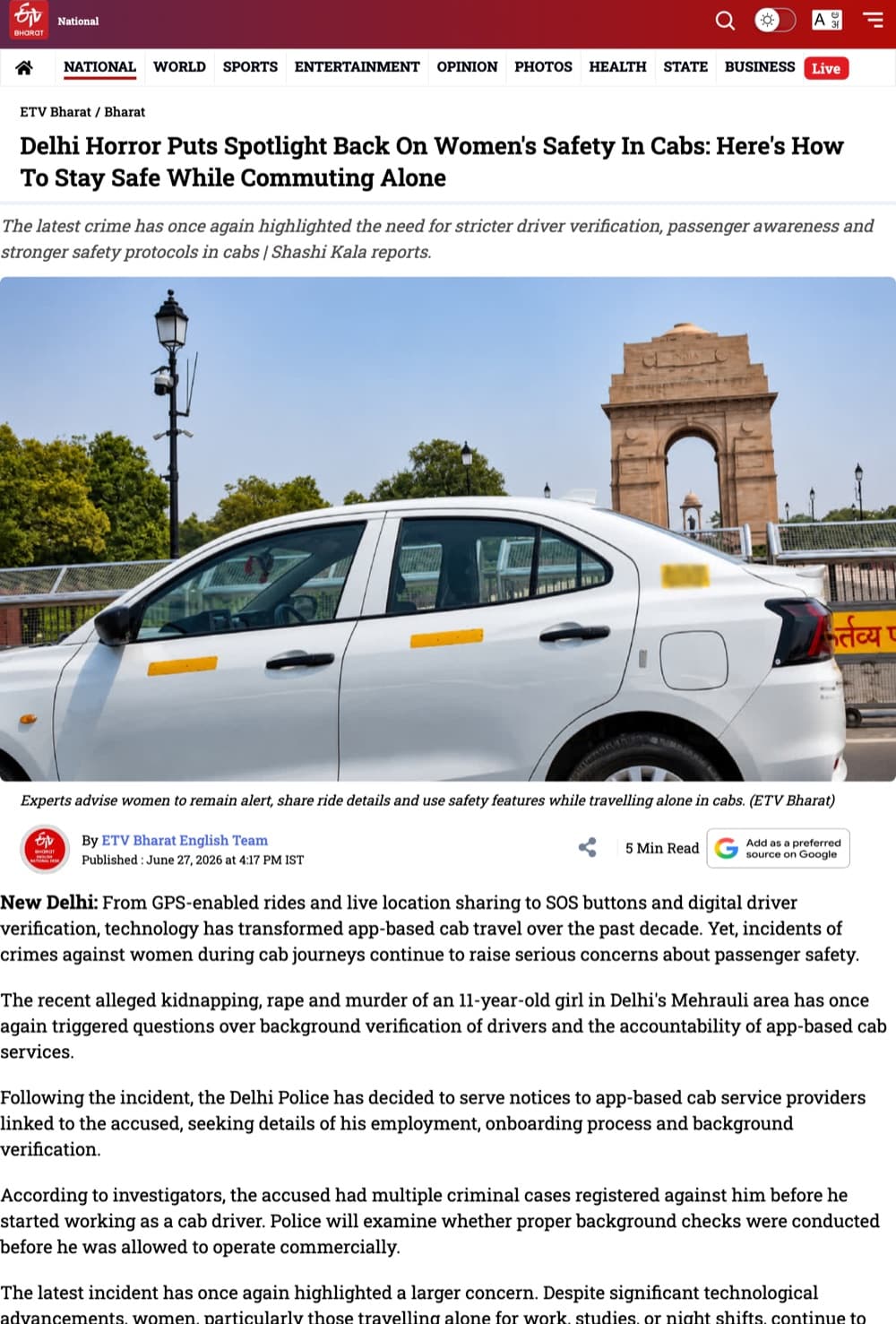
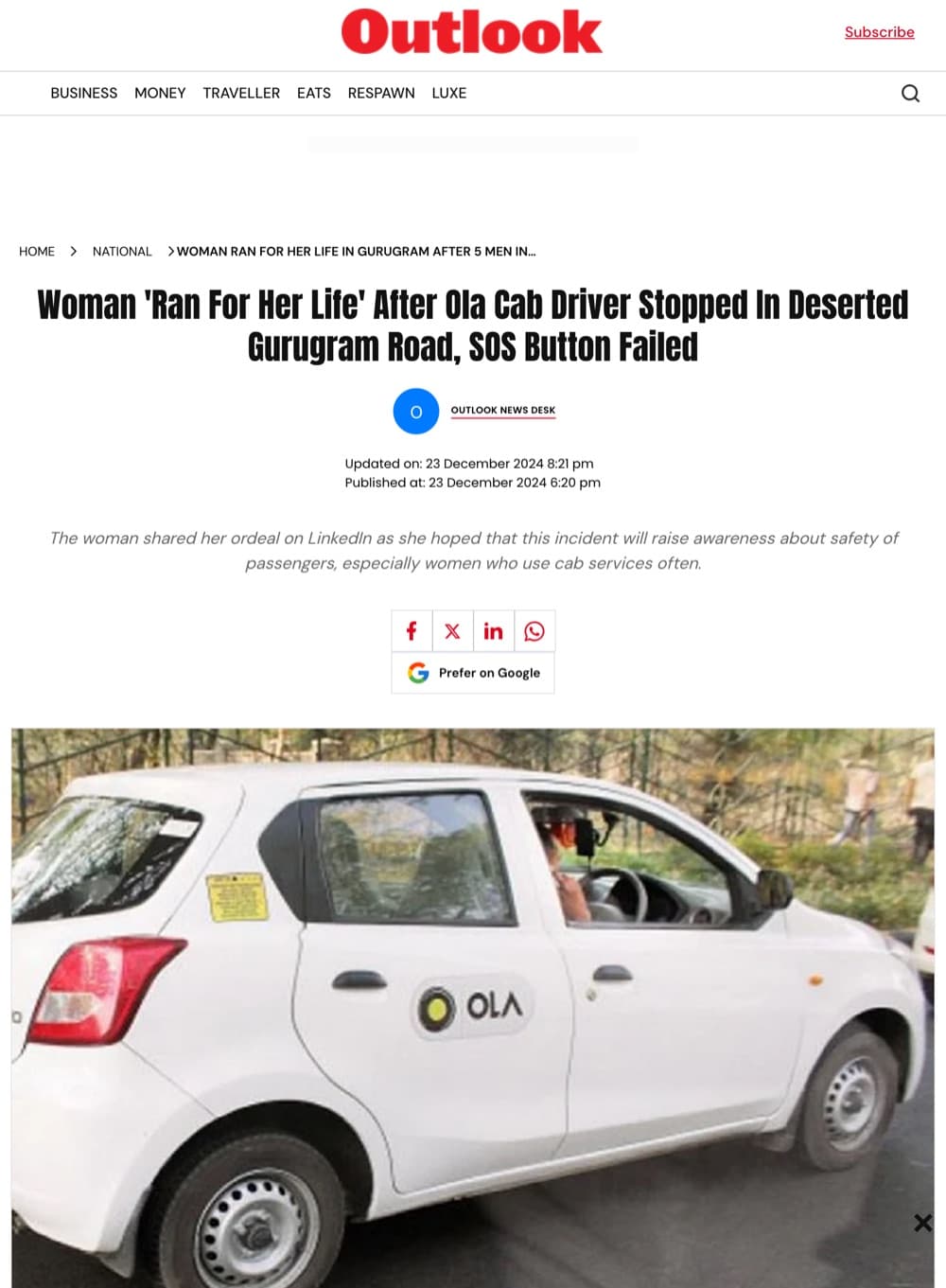
I did not invent this problem. It lives in the papers, in app store reviews, and in viral posts on Reddit, X and LinkedIn that the press keeps picking up. If you read nothing else, read this wall: every card is real, and every article opens the original report.
The other half of the problem:
the ride that never comes.
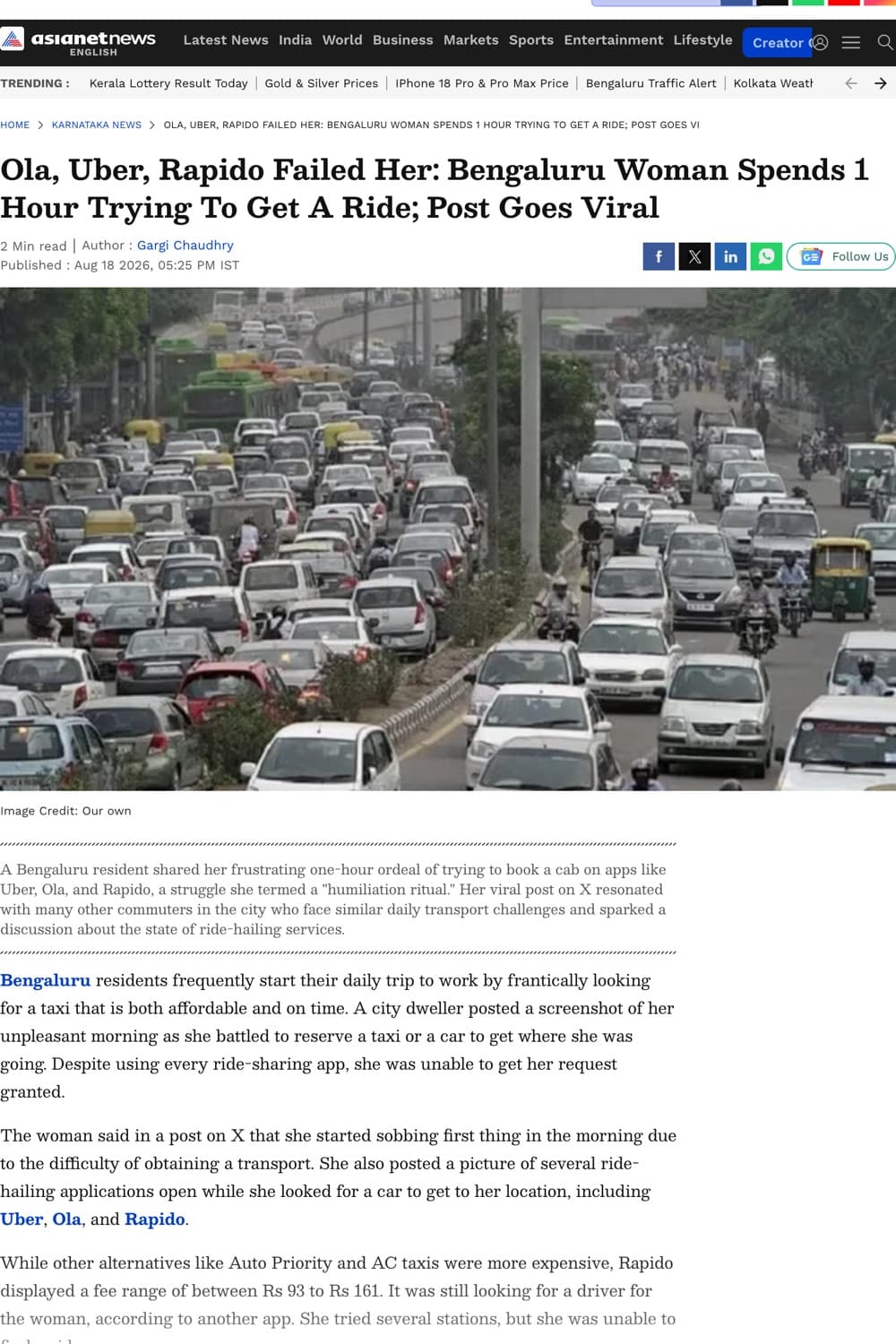
Fear is only half of the night. The other half is a cab that cancels when the driver hears the destination, an hour of searching while surge climbs, or a trip dropped in the middle of the road. SafeRide Priority is built for both halves: it plans the safety and it commits the driver.
Riders are already saying it, in public.
These are screenshots of real reviews from public review pages, captured as they were posted and cropped to the review itself. Review pages give each review no link of its own, so the screenshots carry the proof. Pick an app and read what its riders keep running into at night: refused pickups, cancelled rides, and moments that did not feel safe. Tap any card to read it in full.
Between 8 PM and 5 AM, booking a cab in India is two problems in one. The first is fear: a woman runs her own safety protocol, checks the plate, shares her location and stays on the phone until her door closes. The second is the ride itself: drivers cancel when they hear the destination, nobody accepts the night booking, and some trips end in the middle of the road. The tools the apps offer are real, but they wake up after the car starts moving, and none of them promise the car will come at all.
Six jobs, every night, all manual.
A job is the progress a person wants to make, in her words. The toggle in chapter 5 competes for these six.
The window opened this year.
Four things changed recently. Each leaves the same minutes empty: the ones before the booking.
Its 2026 additions, from in-app recording to ambulance assist, all work once the car is moving. The minutes before booking are still empty.
Maharashtra fines drivers 10% of the fare, capped at ₹100. The rider is still on the kerb. A committed pickup stops the cancel first.
T-Safe monitors rides on request. SafeRide Priority's tracking link and circle SMS are shaped to be that bridge.
The Female rider toggle and the priority match give a choice at booking time, without promising women-only supply.
Every pain sits on a metric Uber already tracks.
No rupee figure yet. Each pain suppresses a number Uber already measures; stage 1 pulls the baseline.
Six insights, six screens.
Every screen in the prototype traces back to something I read. Here is the chain, and a tap takes you to the screen it produced.
- WHAT I SAW
- Every safety tool Uber ships starts once the car is moving. Riders in reviews describe the checks they run before booking.
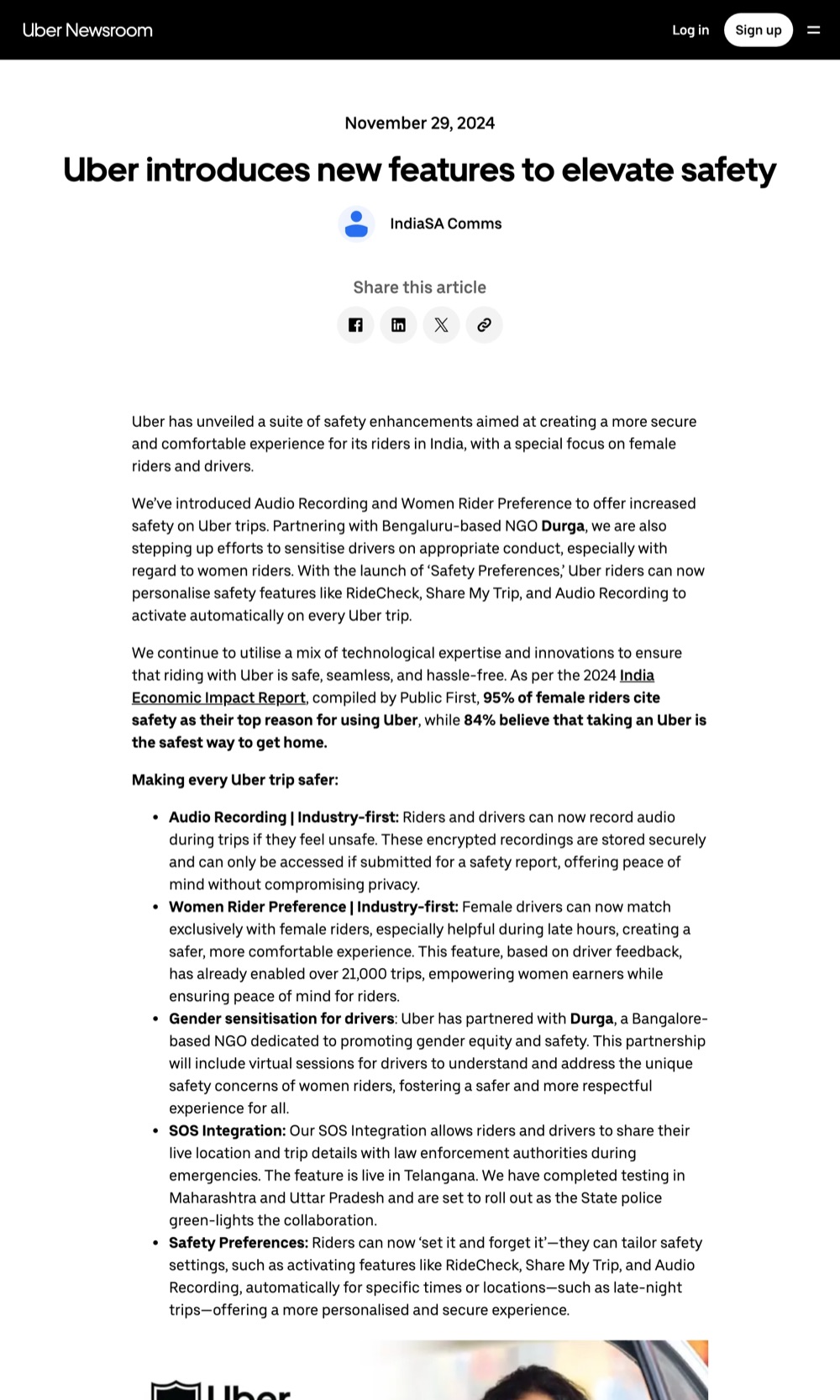 Uber newsroom · India
 - WHAT IT MEANS
- The fear peaks in the minutes before the booking, and nothing speaks to her then.
- WHAT I BUILT
- A plain-language brief at booking, with reasons and a confidence meter.
- WHAT I SAW
- 74% of riders say the cancel comes after the driver hears the destination.Business Standard · Aug 2026
- WHAT IT MEANS
- The driver decides before the rider knows a driver exists. Fines arrive too late to matter.
- WHAT I BUILT
- A committed pickup: the driver accepts before the rider sees the match. Cancel means instant rematch, first in line.
- WHAT I SAW
- Contacts get screenshots and "reached?" texts. Priya's sister keeps the chat open for an hour.
- WHAT IT MEANS
- The person waiting needs three things: who is driving, where the car is, and when to worry.
- WHAT I BUILT
- A Safety Circle with a saved policy. One SMS carries plate, driver, PIN and a live link that expires.
- WHAT I SAW
- Riders describe remembering too late that the lane home is dark and empty.
- WHAT IT MEANS
- The last 200 metres are decided at booking, when nobody is thinking about them.
- WHAT I BUILT
- Safer anchors: one to three staffed, lit drop points within 300 metres, each with its added minutes.
- WHAT I SAW
- Women wrote in reviews and public posts that a hidden score would feel like being judged, or lull them.
- WHAT IT MEANS
- A number implies precision. A label with reasons invites a question.
- WHAT I BUILT
- Four plain categories, two to four reasons each, and Limited Data when coverage is thin. No crime data anywhere.
- WHAT I SAW
- Every trip ends with a message someone forgets to send.
- WHAT IT MEANS
- Closing the loop is a job too, and a loud alarm is the wrong tool for it.
- WHAT I BUILT
- A quiet check-in at five minutes, one reminder, then a calm note to the circle that says it is no emergency.
- The fear is measured. 4 in 10 urban women feel unsafe, more so after dark.
- The no-show is measured. 82% see drivers cancel, 74% after the destination is heard.
- Uber India's safety toolkit is deep, and every tool starts after the car does.
- Hyderabad police already run a night watch for cab rides. 36,000 rides in year one.
- Riders describe the hand-built workaround in public reviews, across every app.
- Feminism in India · NARI 2025Business Standard · Aug 2026Uber newsroom · India
 Telangana Today
- 10 to 15% of cab trips run at night. No platform publishes the share.
- Women riders will switch the layer on when it takes under two minutes.
- The hand-built plan costs Uber trips: bookings never made, rides cancelled mid search.
- Uber's baseline: night completion, cancel-after-accept, share-trip use, support contacts per 1,000 trips.
- 25 rider conversations in the pilot corridors.
- A data partner agrees the pain-to-metric estimates hold up.
From a safety score to four plain words.
- Four options scored on criteria written before the scoring. A layer on Uber's own toolkit won.
- Six decisions changed while building: the score became four words, the window moved to 8 PM, the committed pickup arrived.
- Readable rules decide everything. No crime data, no area labels, no machine learning in the first version.
Four ways to answer the problem. One won.
The four criteria were written before scoring. The losers stay on the table in case a pivot needs one.
Six decisions that did not survive the first draft.
The first version of each was wrong in a way the evidence exposed. Before, after, and why. Each one is live in the prototype.
A number claims a precision the system lacks. A label with reasons invites a question.
See it on screen 2 →82% of riders say drivers cancel on them. The ride that never comes is the same fear, in a different shape.
See it on screen 4 →The person waiting needs the plate, the driver, and a clear signal for when to worry.
See it on screen 5 →The reason sets the queue. Hospital runs go first. The driver sees a flag, never the reason.
See it on screen 1 →The last 200 metres are decided at booking. The original drop stays available and is never called unsafe.
See it on screen 3 →Observable signals in.
Plain-language guidance out.
Simple, explainable rules decide what you see. No machine learning in the first version, no crime data, no personal profiling, no hidden safety scores. When the data is thin it says Limited Data instead of guessing.
Seven steps, under two minutes.
The tools exist.
The flow is missing.
Getting into a stranger's car at night asks for real trust. Uber India already ships strong tools for that moment: SOS, live trip sharing, RideCheck, trip PINs, audio recording and a 24x7 safety line. Each one works. Each one is also a separate switch, and most only matter after you are already sitting inside the car.
SafeRide Priority moves the safety work to before the door closes. One pre-ride check runs the whole plan: it reviews the trip, alerts the driver, picks a safer drop point, and sends your contact a link with the driver's name, plate, PIN and live GPS. By the time you sit down, everyone who should know already knows.
It covers any reason you ride at night in Hyderabad: a late shift in HITEC City, an event across town, an emergency, a long outstation trip. The goal is simple. Reach the destination safely, and feel safe the whole way there.
 Statista · 2023
 Telangana Police · Women Safety Wing
- One pre-ride check, done before you board
- A committed pickup: the driver accepts before you see the match
- One tap says why you ride: emergency, medical, urgent, work
- A priority queue that puts urgent and hospital trips first, any hour
- Driver alerted before pickup when a female rider is on
- Safer, staffed drop points suggested up front
- Contact SMS with driver, plate, PIN and live GPS
- Tracking that lasts the whole trip, city or outstation
- A calm, tiered check-in after you arrive
Eight principles, each answering a named risk.
A safety feature can do harm of its own. Each card names the risk first, then the design that answers it.
What SafeRide Priority will never build.
A concept is only as clear as its edges. Six things people ask for first, and why each stays out.
Supply cannot promise it every night. A priority match with a visible trade-off can.
A number claims precision the system lacks. Four plain categories with reasons instead.
Stigma for neighbourhoods. False precision for riders.
The ride books either way. The layer removes the juggling, never the choice.
Readable rules can be audited. A model cannot be explained at the kerb at midnight.
Each exists or belongs elsewhere. The empty minutes are before booking.
Six of the ten types, and none of them is a new feature.
Ten public types of innovation. A tick only where SafeRide Priority truly changes something; the rest say why not.
An optional priority fee, and fares that complete because the driver committed.
Hyderabad police's T-Safe as the tracking partner. Metro gates, hospitals and fuel stations as anchors.
No new team or org. The pilot borrows people who already exist.
One pre-ride check replaces six manual steps. The driver commits before the rider sees the match.
Every feature the flow uses already ships. I add no new capability, I put them in order.
A layer over Uber's toolkit, with a contact view and a city bridge that work together.
The circle SMS, the calm check-in, the first-in-line rematch when a driver drops out.
Same booking flow, same SMS. Nothing new to install or find.
Uber's brand, untouched. SafeRide Priority is a toggle, and the disclaimer says so.
Consent before every share. A brief you can question. One tap says why you ride tonight.
The rule of thumb behind the checklist: three types beyond product features is the floor, and five or more working together is what rivals find hard to copy. SafeRide Priority ticks 6. The feature list is left alone on purpose.
- Every tool the flow arms already exists on Uber India. Nothing is removed.
- The flow runs on fixed, readable rules over five signals. No machine learning in v1.
- The eight-screen prototype runs end to end, contact view included.
- Four options were scored on criteria written first. The Uber layer won on both halves.
- A plain brief raises a rider's sense of control.
- A saved sharing policy beats typing to the group chat every night.
- Safer drop points are taken when they add under 3 minutes on foot.
- Riders trust the priority match while the extra wait stays short.
- Pilot stage 2: brief and circle for the opt-in cohort, against a control group.
- Pilot stage 3: priority matching on, with the wait premium and standard supply watched.
Two ways in: watch it think, or drive it yourself.
- The prototype, below on this page, is the guided way in: the tour plays the eight screens with a note on what each adds and why.
- The pilot app is the hands-on way in: the same screens as a standalone app. Flip the toggle, say why you ride, pick an anchor, book. On a phone it opens like a real app.
- Neither is the pilot. The pilot is the eight-week Hyderabad test in chapter 6, and it has not run.
Watch it think.
- The tour plays all eight screens in thirty seconds, choosing an anchor, a match and a circle for you.
- A step list sits beside the phone: tap any step to jump straight to its screen.
- Every screen carries a note on what it adds and why it exists. This is the version that explains itself.
Drive it yourself.
- The same eight screens with the notes taken off. No tour, no script: you flip the toggle, say why you ride, pick the anchor, save the circle, book.
- Opens full screen in its own tab. On a phone it opens like a real app, which is the best way to feel it.
- Everything is still simulated. Nothing real is booked, tracked or messaged.
One product, two doors. And neither door is the pilot itself: the pilot is the eight-week Hyderabad test designed in chapter 6, and it has not run. The pilot app is what a rider in that pilot would open.
Start on the Uber splash. End at the arrival check-in.
The app opens on the Uber splash, lands on home, and the safety flow runs in 7 steps: in the city or outstation, on every ride type except Parcel. Sample Hyderabad locations, fictional drivers and contacts. Nothing real is booked, tracked or contacted. Prefer no commentary? The pilot app above opens the same screens hands-on.
The SMS and live tracking contacts get.
The moment Priya saves her Safety Circle, each contact gets an SMS with the driver's name, vehicle, plate, trip PIN and a live tracking link. This phone belongs to Ananya: tap the blue link for live GPS, trip details and calls. It mirrors every choice you make in the demo above, in the city or outstation.
Five features, one flow built on consent.
P0 ships in the pilot. P1 follows once the pilot holds.
A safety brief
you can question.
Lower, Elevated, Higher, or Limited Data. Every result comes with 2 to 4 plain language reasons, a data confidence meter and a Why am I seeing this panel. Your booking always goes through either way.
See the full trade-off
before you choose.
Verification complete · safety training · 1000+ trips · clear review status. Driver eligibility rests on several audited signals, and star ratings are only one small part. The +4 min and +₹20 trade off sits right on the card before you pick. And every SafeRide Priority match is a committed pickup: the driver accepts your trip before you see the match, and a cancel means an instant first-in-line rematch.
Sharing that asks first.
Links that expire.
Up to five trusted contacts and one sharing policy set once: ask every time, after 8 PM, higher risk trips only, or never. You give clear consent before the first automatic share, and every live tracking link expires in 30 minutes. When Female rider is on, live GPS sharing is mandatory.
A safer spot to step out,
a short walk away.
Staffed gates, metro entrances and 24/7 venues within a short walk, each with a clear reason and the extra minutes it adds. Your original drop point stays one tap away, and the app says nothing bad about it.
A quiet check-in
after you arrive.
Five minutes after the trip: "Did you reach safely?" One reminder at ten. Only then a calm note goes to your Safety Circle, and the message itself says this is not an emergency alert. Escalation always needs a human.
The jobs she does by hand tonight.
Same rider, same 12:15 AM trip from HITEC City. Each row is one of the six jobs from chapter 3. It starts as tonight looks. Flip the toggle to see how SafeRide Priority does each job.
Four bets, each with the number that would kill it.
- Four hypotheses, each with a metric, a sample, a duration and a stop rule written before the pilot starts.
- The people I would sit with first: 25 women who ride after 8 PM, 8 students, 10 contacts, 10 night drivers, 3 safety operators.
- Eight weeks in Hyderabad, five stages. Money and permission unlock only on evidence from the stage before.
Each bet names the number that would kill it.
Written before the pilot, with the analysis pre-registered.
A hypothesis without a stop rule is a wish.
A plain-language brief raises a rider's sense of control on a late-night trip.
- METRIC
- Perceived control, 5-point scale, and comprehension of the brief
- SAMPLE
- Opt-in cohort against a matched control group
- WHEN
- Stages 2 and 3
STOP RULE · Comprehension under 70%: riders reading the brief as a guarantee
A saved Safety Circle removes the manual trip-sharing ritual.
- METRIC
- Share actions per night trip, time from open to booked
- SAMPLE
- Cohort against control
- WHEN
- Stage 2
STOP RULE · A single consent complaint
Riders accept a safer drop point when it adds under 3 minutes of walking.
- METRIC
- Acceptance rate by added minutes
- SAMPLE
- Every cohort trip offered an anchor
- WHEN
- Stage 2
STOP RULE · Acceptance under 10% at any added time
A committed driver is worth a small wait or fee, as long as the wait stays short.
- METRIC
- Match selection by added ETA, NPS by selection
- SAMPLE
- Half see the wait premium, half the rupee premium
- WHEN
- Stage 3
STOP RULE · Median added wait above 5 minutes, or standard night supply falling
56 conversations and six shadowed rides before stage 2.
Screener: rides after 8 PM in the last 30 days, Uber as a primary or secondary app, rides alone at least sometimes. The guide walks the last night ride step by step.
HITEC City, Gachibowli, Financial District. The last night ride, step by step, and the moment of least control.
Cheaper rides, later hours, a different set of workarounds.
What they need to stop asking: plate, driver, and when to worry.
Whether a committed pickup and a priority flag feel fair, and what an appeal path should look like.
Where escalations come from tonight, and what a calm check-in note must never say.
With permission, timing every manual step. The as-is map, measured.
A price ladder, then a split between minutes and rupees.
Five prices in order, so the answer is a curve. Stage 3 splits the premium: minutes or rupees.
Five stages. Money and permission unlock on evidence.
Hyderabad: HITEC City, Gachibowli and the Financial District. Riders who choose to switch it on. Women first, open to anyone. Eight weeks, read against criteria written before week one.
The rules, the screens, this case. Moderated sessions on copy and consent.
Riders read the brief as guidance and can set up a circle unaided.
Compute the brief for every eligible trip. Show nothing. Pull the baselines.
Night completion, cancel-after-accept, share-trip use, support contacts. Coverage above 80%.
Brief, anchors and Safety Circle for the cohort, against a control group.
Activation, circle setup, check-in, comprehension, perceived control.
The committed pickup switches on. Half see the wait premium, half the rupee premium.
Match selection, added wait, standard supply, what riders will pay.
More Hyderabad zones, then the T-Safe bridge. Only if every stop rule held.
The value model, signed by finance.
Five beliefs the case leans on, and the fact that would end each.
Important and thinly evidenced, so they are tested first. If one falls, the case changes shape before any money does.
Activation under 15% in stage 2 with comprehension holding.
Shadow mode showing cancels are not linked to the destination.
Priority match under 10% selection at both premiums.
Median added wait above 5 minutes.
Anchor coverage under 60% of pilot drop points.
Nothing measured yet. Here is exactly what would count.
- No pilot has run. Every number here is what the pilot in chapter 6 would read out, marked as a hypothesis.
- One north star, eight targets, six guardrails. The money model shows its working: ₹0.7 to 1.4 crore a year, illustrative.
- Four lessons from building it alone, including the one I would do differently.
One number to read every week.
Under it: eight targets the pilot would test, and six lines that would stop it.
SafeRide Priority-supported late-night trips completed with a positive rider-reported sense of control and no safety-support escalation.
A health proxy, read weekly. No model measures safety outcomes at pilot scale, so I measure what the pilot can see.
- Added wait. Median extra wait from a priority match stays under 5 minutes.
- Limited Data. Shown whenever coverage falls under 80%. Never a guess.
- Contact alerts. No-response alerts on under 10% of trips.
- Consent. Zero tolerance for a share nobody agreed to.
- Core booking. No drop in completion for riders who leave the layer off.
- Opt-out. Investigate if more than 20% switch it off after trying it.
What one night in Hyderabad could be worth.
Two lines of value: the optional fee, and fares that complete. Every input wears its tag.
- App cab trips in India, per dayabout 1.6 millionSOURCED
- Share that runs at night10 to 15%ASSUMPTION
- Hyderabad's share of night tripsabout 8%ASSUMPTION
- Riders who switch the layer on35 to 45%PILOT HYPOTHESIS
- Trips the brief reads as elevatedabout 40%ASSUMPTION
- Elevated trips that pick the priority match25%PILOT HYPOTHESIS
- Priority fee, shown before booking₹20 and about 4 minutesPILOT HYPOTHESIS
- Night bookings that die to a cancel todayunknown. 8% used belowASSUMPTION
- Cancels the committed pickup saveshalf of themPILOT HYPOTHESIS
- Average night fare, platform shareabout ₹250, about 25%ASSUMPTION
Equentis Research · Aug 2025- Night trips in Hyderabad, per night1.6M × 10 to 15% × 8%13,000 to 19,000
- Trips with the layer on× 35 to 45%4,500 to 8,500
- Priority matches chosen× 40% elevated × 25%450 to 850 a night
- Priority fee, per year× ₹20 × 365₹33 to 62 lakh
- Cancels recoveredactivated × 8% × half180 to 340 trips a night
- Recovered fare share, per year× ₹250 × 25% × 365₹41 to 78 lakh
Hyderabad nights only, before cannibalization and adoption drag. An order of magnitude to argue with, no more.
Three levers, two things that could go wrong.
Money is a delta against today's numbers, and the harm it could do is named.
Night trips that complete instead of dying mid search. Plus the optional fee.
Fewer support escalations. The check-in closes trips without a call.
A rider who feels in control rides again and tells her circle.
Priority matching pulls drivers out of the standard night pool. Other riders wait longer.
How I watch it: Shadow mode measures standard night ETA first. Median added wait above 5 minutes stops the pilot.
An extra screen at booking suppresses bookings for riders who never wanted it.
How I watch it: The toggle is off by default. Completion for non-activators is a weekly guardrail.
Nine blocks, each marked by how sure I am.
The classic canvas. Every block carries a tag: evidenced, design, assumed, or unknown.
- Telangana Police, T-Safe
- Staffed venues and metro gates
- Trust & Safety and Privacy inside Uber
- Run and audit the rules engine
- Verify and train partner drivers
- Send and expire the circle links
- One toggle. The trip is planned, the driver is committed, the right people know, and the loop closes when she arrives.
- Opt in. Consent before every share
- A brief you can question
- Appeal and training path for drivers
- Night riders, women first
- Their trusted contacts
- Verified partner drivers
- The safety toolkit Uber already ships
- Driver verification data
- Map data on lit, staffed places
- Inside the Uber booking flow
- SMS and a web link for contacts
- T-Safe for the city
- One squad for a quarter to build
- SMS, link hosting, audit hours to run
- The wait premium the marketplace absorbs
- Optional priority fee
- Recovered night trips
- Support cost saved, trust gained
Four lessons from building it alone.
Every screen reads its values from one rules file. When the window moved from 10 PM to 8 PM, one line changed.
Retyped quotes read as opinion. Real screenshots with a link read as proof. I rebuilt the review wall for that reason.
Nothing on this page is an outcome. Every target is a hypothesis with a stop rule next to it. That honesty is the case.
The next step needs Uber's baselines and real riders. That is why the ask is small: eight weeks, one corridor.
- Every metric in this chapter already sits on Uber's dashboards. Stage 1 pulls the baseline.
- The price signal exists in the design: ₹20 and about 4 minutes, shown before the rider confirms.
- Hyderabad riders already use a watched night ride. T-Safe monitored 36,000 in year one.
- The cost side is small: one squad for a quarter, on tools Uber already paid for.
- Telangana Today
- 35 to 45% of eligible riders switch it on. A quarter of elevated trips pick the priority match.
- About 8% of night bookings die to a cancel today. A committed pickup saves half.
- Riders accept ₹20 or 4 minutes for a driver who has already committed. Untested.
- Priority matching keeps standard night waits under 5 minutes.
- Stage 1: the baselines, pulled and dated.
- Stage 2 and 3 readouts against the targets, with the control group.
- A value model finance signs: revenue lift, cost saved, experience gained, against the baseline.
Eight weeks in Hyderabad, then every riding app.
- Eight takeaways, one per chapter, each linked to the evidence that earns it.
- The recommendation: an eight-week opt-in pilot in Hyderabad, with five rules that would stop it.
- Next: the pilot, then an MVP, then the same layer inside Ola, Rapido, inDrive and Mana Yatri. Feedback welcome on LinkedIn.
Eight chapters, eight takeaways.
If you read nothing else, read these. Each links to the chapter that earns it.
One squad, one quarter, one corridor.
Small and bounded. What I ask for, what it costs the roadmap, and the five things that would stop the pilot before week eight.
Eight weeks on the Hyderabad roadmap. The first two weeks show riders nothing.
Riders in the IT corridor who choose it, plus a matched control group.
A PM, a designer, three engineers. Part-time help from data, Trust & Safety, Privacy and city Ops.
The same squad-quarter would ship one mid-size rider feature. That is the trade.
Written before the pilot starts. Any one of these ends the run and files the learning.
- 1Any share a rider did not agree to. One is enough.
- 2A drop in booking completion for riders who leave the layer off.
- 3Median added wait from priority matching above 5 minutes.
- 4Fewer than 70% of riders reading the brief as guidance.
- 5Shadow mode showing night cancels are not tied to the destination.
Now, next, later. Each unlocks on evidence.
Dates promise output. This roadmap promises learning: each horizon names what must be true before it starts.
- Shadow mode and the baseline pull
- Brief, anchors and Safety Circle for the cohort
- Priority matching in the last three weeks
A pilot slot and the squad. Stage 1 pulls baselines before stage 2 shows anything.
- Every Hyderabad zone
- The T-Safe bridge with Hyderabad police
- Telugu and Hindi
- Why-this-ride reasons feeding the queue at any hour
Every stop rule held through week eight. Finance signed the value model.
- Bengaluru, Delhi, Mumbai nights
- Outstation trips tracked end to end
- The same layer inside Ola, Rapido, inDrive, Mana Yatri
Two cities show the same deltas. Themes here, never promises.
Nothing in SafeRide Priority is Uber-only. The brief, the safer drop, the committed pickup, the circle and the check-in sit on top of any booking flow. Uber goes first because its toolkit is deepest, so the pilot reads out fastest.
- Prototype
- Pilot
- MVP
- Any riding app
Eight seats. Today one person holds all of them.
A pilot borrows more than it hires. The seats, who covers each, and the reviews on the calendar. Today, every seat is me.
The case, the rules, the pilot design, the readout.
Eight screens, the contact view, copy that reads at midnight.
The toggle, the brief, the circle, the check-in.
The committed pickup and the first-in-line rematch.
Baselines, the rules audit, the fairness review.
Escalation rules, driver eligibility, incident review.
Consent flow, link expiry, retention, legal review.
Driver training, the anchor list, the T-Safe conversation.
- Pilot metrics and guardrails · Product, Trust & Safety, OpsWeekly
- Driver eligibility fairness review · Data science, Trust & SafetyMonthly
- Rules audit · Product, Data scienceMonthly
- Privacy and consent audit · Privacy counselQuarterly
- Incident review · Trust & SafetyWeekly, or same day
- India's data protection rules: consent at the point of sharing, purpose limited to the trip.
- Motor Vehicle Aggregator Guidelines 2025 and the state rules under them.
- Telecom and SMS policy for the circle messages.
- Expiring, tokenised links. No precise location kept after the trip. 90-day retention, then anonymised.
- An audit log for every share and every escalation.
- Legal review before anything reaches a real rider.
Who is better off, who could be worse off, and what I do about it.
A woman booking a cab after dark stops being her own safety officer. Her contact stops asking. A verified driver gets a committed trip. The city's night watch gets the cab apps it asked for.
Drivers who do not qualify for the priority match lose some night demand. A rules engine can get eligibility wrong.
Eligibility criteria are published. Every driver gets an appeal and a training path. A fairness review runs monthly, results kept.
Supported night trips completed with a reported sense of control and no escalation. Read every week of the pilot.
Problem first. Rules before screens. Evidence with its tags on.
- 1Problem first: a written PRD with a one-line hypothesis, and 84 plain rules for what the product will and will never do.
- 2Then the prototype: eight screens and the contact view, every value read from the shared rules.
- 3Then this page, written for the room that decides. Every number is tagged: sourced, assumed, or a hypothesis.
- 429 review screenshots, six news reports and every market figure link to where they came from. Persona names are fictional.
One person wrote every line of this. It needs other eyes.
A number that looks off, a risk I missed, a better way to run the pilot, or a reason it should never ship. Criticism, inputs and advice are all welcome, and I read every message.
- The problem is measured, the solution is clickable, and the business model is written down with every assumption labelled.
- The ask is bounded: one squad, one quarter, one corridor, eight weeks.
- Five stop rules are written before the pilot starts.
- The product council funds evidence over faith.
- The night market grows when the ride actually comes. The pilot's completion numbers test that first.
- A yes or a no from the room this case was written for.
- If yes: the stage 1 baseline pull, then the readout in week eight.
- If no: the reason, logged, so the next pass starts from it.